• Preservation
  • Histories
  • Exhibitions
  • About
  • Acclaim
  • Blog
  • Shop
  • Contact
Menu

Carolina Historical Consulting, LLC

703 Junaluska Rd
Boone, NC 28607
(828) 773-6525
Preserving Our Past with Integrity

703 Junaluska RD                                          Boone, NC 28607                                                   (828) 773-6525

Carolina Historical Consulting, LLC

  • Preservation
  • Histories
  • Exhibitions
  • About
  • Acclaim
  • Blog
  • Shop
  • Contact

Dr. Plaag Speaks at Headstone Re-Dedication for Union Soldiers in Boone

April 9, 2018 Eric Plaag

Wreaths and flags adorn the graves of (L to R) Pvt. John E. Maricle, Pvt. Henry P. Evans, and Pvt. William T. Bradley in the Boone Cemetery. Photo courtesy of Ken Ketchie, High Country Press.

On April 8, 2018, our principal consultant, Dr. Eric Plaag, spoke at the Town of Boone's headstone re-dedication service for three Union soldiers who died and were buried in the Boone Cemetery in April 1865. The following is a typescript of his remarks from the service. You can read a press account of the service AT THIS LINK.

Good afternoon. As the chairperson of the Boone Historic Preservation Commission, I am grateful for the work of the Town Manager, my fellow commission members, and especially the Planning and Inspections and Public Works staff of the Town of Boone for preparing this hallowed ground and all of the logistics for this occasion today. I am also thankful for the participation of Michael Bossé, our bugler, and all of the members of Major General George Stoneman Camp No. 6 of the Sons of Union Veterans of the Civil War, particularly Robert Crum, who went to great lengths to make sure we got everything right about this long overdue ceremony.

And now, I take off my chairperson hat and speak to you as Eric Plaag, historian and preservationist. Those are fancy titles for someone who is really just an interpreter for the dead, especially since the dead typically do not speak for themselves from beyond the grave. So what I say here are my words, my thoughts, and my interpretations, to be taken as you see fit.

It is no secret that our re-consecration of the graves of these three Union soldiers, Private William T. Bradley, Private Henry P. Evans, and Private John E. Maricle, is not without its controversy. It is no secret that the politics of our time have made some feel more comfortable in expressing their lingering anger at and hatred for men like these soldiers, simply because they wore blue in a mountain landscape where neighbor sometimes killed neighbor over the purest example of irrational tribalism our nation has ever known. As one man recently wrote in the comments section of one of our local, digital newspapers, grinding his axe to use once more against the context of history, “These men were criminals. They were a part of Sherman’s dirty crew.”

I spent three years of my life in the swamps of South Carolina, hunting down and mapping the exact paths of Sherman’s men, and as someone who was threatened and called a traitor for demanding the removal of the Confederate flag from Columbia’s State House grounds, I will nevertheless be the first to tell you that many examples of criminal behavior can be found in the stories of Sherman’s men. But for every one of those stories, there is another from the Confederate side, detailing how the men in grey robbed and pillaged their own civilian population, especially as the war looked lost in 1865. That story was repeated here in Watauga County. Yes, there were horrible tales of overzealous Union troops preying on local civilians—Jacob Mast Councill, unarmed and pleading for his life in his field, was nevertheless gunned down and lies buried not 50 yards from here. But the Confederates of Watauga County exacted their own horrors from Watauga’s civilians, too. John Preston Arthur told us in 1915 that the western Watauga Home Guard hanged Levi Guy for no other crime than feeding his Unionist sons when they came home, and that the Home Guard that defended Boone in March 1865 was there not as a Confederate force but to guard “against the robbers and marauders of both sides.” Corruption, evil, and injustice privileged neither the Blue nor the Grey as their preferred ally.

Further complicating the narrative was the reason for the war itself. Neo-Confederate apologists like to trot out the “states’ rights” defense, a one-trick show pony so simpleminded that its deceits are betrayed by the pro-slavery arguments made by their own secession convention politicians. Sherman apologists often like to say that Union troops were fighting against the evils of slavery, apparently forgetting that the war in the beginning for most Unionists was about exactly what their name implied—preserving the union. Lincoln and Sherman both resisted emancipation as an end goal until it was clear that the war would last longer than anyone had originally expected. Even in 1863, following the issuance of the Emancipation Proclamation, Lincoln underscored the cause of the great conflict: “We are in civil war. In such cases there always is a main question; but in this case that question is a perplexing compound—Union and Slavery. It thus becomes a question not of two sides merely, but of at least four sides, even among those who are for the Union, saying nothing of those who are against it.”

Buried in that analysis, of course, is the truth for these three men whom we honor today. They were not slave owners. They were not politicians. They were not powerful businessmen who played both sides in the interest of war profiteering. They were the lowest ranking of the rank and file, men whose lives had been disrupted by conscription. All three were poor farmers who probably had no dog in the fight over the question of slavery. Evans was 33 years old. Maricle was 29. Bradley was an 18-year-old boy. As was the case for most Civil War dead, these men were cut down not by bullets but horrific diseases like typhoid pneumonia and measles. And although they were mustered into service in Tennessee, Evans and Bradley were both North Carolina boys, and Maricle from Kentucky, suggesting that the war found them, perhaps after being given a choice between service in the Union army or wasting away in a federal prison camp. 

This is the story of war in America, and it remains so today. In the Civil War, men who could afford to paid bounties so that other men would serve in their place. In later wars, when that was illegal, the wealthy and well-connected avoided the draft through college deferments or cushy stateside assignments or doctor notes about bone spurs that nevertheless didn’t hurt their golf game. And too often, it is the well-connected who freely choose to sacrifice the lives of our young men and women for ends that would never have benefited those men and women. And when it ends poorly, we tend to blame those who fought, rather than those who chose to make us fight. It is so easy to denigrate the memory of men like Bradley, Evans, and Maricle when we have not marched even a mile in their shoes, let alone taken a moment to learn something about who they were and why they served.

So, on this day when we pay them that courtesy, 153 years after their deaths, I urge you all to follow the example of Benjamin Councill, Sr., on whose land we now stand. In late March 1865, Mr. Councill hauled up this hill the coffin containing his son, Jacob Mast Councill, who had been murdered in cold blood by Union occupiers, and laid his son to his final rest. Two weeks later, Mr. Councill consented to his land being used for the burial of three other men, this time from the same army that had killed his son. When federal officials returned 14 years later to erect proper memorials on their graves, the Councill family—who still owned this land—did not object. May we all be accorded such respect by those with good cause to dismiss us as their enemies.

I thank you all for joining me in this occasion to do right by these three men, by whom history and local sentiment have often not done right. May their graves be treated with respect and care, and the complexity of their lives and their history be honored and remembered, for centuries to come.

Comment

Dr. Eric Plaag Awarded the NSDAR Historic Preservation Medal

March 2, 2018 Eric Plaag
From L to R: NSDAR Daniel Boone Chapter Regent Jill Privott, Town of Boone Mayor Rennie Brantz, Dr. Eric Plaag, and NSDAR Daniel Boone Chapter Historic Preservation Committee Chairperson Mary Moretz. Photo courtesy of Ken Ketchie, High Country Press.

From L to R: NSDAR Daniel Boone Chapter Regent Jill Privott, Town of Boone Mayor Rennie Brantz, Dr. Eric Plaag, and NSDAR Daniel Boone Chapter Historic Preservation Committee Chairperson Mary Moretz. Photo courtesy of Ken Ketchie, High Country Press.

On February 25, 2018, the National Society Daughters of the American Revolution awarded our principal consultant, Dr. Eric Plaag, the NSDAR Historic Preservation Medal. This medal is designed to honor an individual whose volunteer service, promotion, and dedication to historic preservation has made a distinguished contribution on a national, regional, or state level. It is the highest award conferred by the NSDAR for historic preservation.

The Daniel Boone Chapter conferred the award to Dr. Plaag at a ceremony in Boone, North Carolina. As part of the reception and ceremony honoring Dr. Plaag, the Boone Town Council and Mayor Rennie Brantz proclaimed February 25, 2018, as Dr. Eric W. Plaag Day in honor of Dr. Plaag's achievements. Full coverage of the event can be found in this article from the
High Country Press.

As part of the ceremony, Dr. Plaag was asked to make a brief keynote address. The following is the full text of Dr. Plaag's remarks:

First, I am so deeply honored to receive this medal, which was completely unexpected when Mary Moretz and Brenda Councill first delivered the news to me back in December. I’d like to thank the Daniel Boone Chapter of the National Society Daughters of the American Revolution, not only for this recognition but also for the impressive dedication you exhibit in serving our community and its understanding of the past. I’m also very grateful to Mary Moretz for shepherding my nomination through the process and Brenda Councill, Phyllis Shore Baumbaugh, and Jill Privott for their leadership in putting together such an amazing event on my behalf. I am indebted to Chuck Watkins, John Ward, and Bettie Bond, not only for being partners on so many historical projects here in Boone but also for writing testimonials on my behalf for this award. I’m delighted that my dear friend Lawton Clarke O’Cain, who has sent a prodigious amount of work my way over the past ten years, was able to make the long journey from Estill, South Carolina, for this event, along with her friend Sunny, who graciously volunteered to accompany Lawton. I’m also very blessed that my family—my wife Teresa, my brother Gary, and my son Griffin—are here with me today. Thank you to all three of you for listening to me prattle on about local history and keeping our little world running when I’m out trudging through swamps, forests, musky libraries, and old houses. And I’m especially grateful to the members of this and many other communities—academics, writers, genealogists, and just regular old folks, living and dead—who have told me their stories, pointed me to forgotten sources, collaborated with me on projects, and made history more accessible to all of us. I could not do my work without you, and I remember that every single day.

Mary Moretz has asked me to say a few words about history, so I’ll begin with a story, as all good histories do. Several years ago, my friend Lawton arranged for me to meet with a highly distinguished scholar of Lowcountry South Carolina history and compare notes on a project I was working on. He was in his late 90s then but still sound of mind and sharp as a tack, his social graces as conservative and rigid as his politics. I confess that I was a little nervous, and he did little to put me at ease when he pulled out his extensive volumes on his matrilineal and patrilineal heritage.

“I’ve traced my mother’s side back to Charlemagne,” the good doctor said, “and my father’s side back to Adam.” I thumbed through his genealogies briefly, and indeed they made these claims.

“Now, tell me about your people,” he said.

I’d been in these kinds of pedigree-measuring contests before, though never with someone so esteemed. I could have gone on about Wernher von Braun being a not-too-distant cousin on my father’s side, or how the Plaags were closely related to Prussian royalty. Instead, I chose to tell the other part of the story.

“It’s difficult to say too much about my mother’s side,” I said, “since my great grandfather was a fraud.”

“Excuse me?” the doctor asked.

“He was a fraud,” I answered. “He married my great grandmother under a false name, then abandoned her and their children. We have no idea who he is.”

“Oh, my,” the doctor gasped. “Well, what about your father’s people?”

“Oh, where to start?” I asked. “Maybe with my great grandfather. He was a socialist labor leader from New Jersey who held union picnics in his backyard.”

And with that, our conversation moved on swiftly to other topics.

I tell you this story to amplify my company’s motto: Preserving Our Past with Integrity. In my case, integrity is represented by the rabid devotion I have to meticulously fighting my way to the truth, the good and the bad of it. Integrity guides everything I have ever done as a historian.

So, in practice, what does integrity mean as far our local history? Above all else, it means telling the full story, rather than gussying things up like some sort of slick, misguided PR campaign.

It means that it’s completely fine for us to repeat the compelling story about the son of one of Boone’s founders, unarmed and pleading for his life, being gunned down at his barn in March 1865 by marauding Union troops PROVIDED that we also mention that he was standing next to one of the six people enslaved by his father when it happened. It means it’s perfectly appropriate to enumerate the accomplishments of Boone’s business leaders who transformed a sleepy county seat into a bustling commercial center in the mid-1920s PROVIDED that we also talk about the giant Ku Klux Klan festival and parade the town’s civic leaders put on in 1925 and remind ourselves that they actually re-named the second floor meeting space in the old 1875 Courthouse “Ku Klux Klan Hall.” The same rules on integrity apply to architectural preservation, too. Preserving and re-using an intact and historically significant building is noble and admirable, PROVIDED that we don’t exaggerate its importance with patently false and easily debunked claims about its connections to Tweetsie Railroad or Daniel Boone, as has happened repeatedly in our community.

Integrity is often blunt and impolite, and frankly, in a culture beset by truthiness and spurious claims about fake news, a culture where up is down and our leaders insist they didn’t say what they said on camera yesterday, integrity needs to be blunt and impolite to even be heard. If I had a dollar for every person who has claimed to me personally that HE was the one who started the popcorn fire in the Appalachian Theatre in 1950, I’d have enough money to donate the new popcorn machine for the theater when it re-opens. What these tellers of tall tales don’t know is that I have a copy of the trial testimony of the 15-year-old boy who accidentally started that popcorn fire, courtesy of a rather important North Carolina Supreme Court case involving the theater. I know precisely who our accidental firebug was. His name was William Randolph Jones, and he went by “Bill.” He was the son of Mary Louise and Raymond Jones, and I’m fairly certain he died in Klamath, Oregon, in 2005. So, I’ll listen to your story about how YOU were the one who started the fire, but don’t expect me to believe it or preserve it or retell it. I’m far more likely to call you out, although if we’re in polite company, I might soften the blow—as someone raised in the South—with a “Bless Your Heart.”

Writing good histories and properly preserving our past demands context. We must be skilled weavers of tapestries that are fair, proportionate, exacting, and—yes—critical of ALL parties to the tale. We must be meticulous about getting the facts right, even when it is uncomfortable or costly or dangerous. Anything else is shameless boosterism and humbuggery, no different from the subscription-financed, self-congratulatory Who’s Who histories of yore. Our descendants deserve better than that.

When we are honest about our past, we begin to find our humility. And when we find our humility, we begin to find our humanity. Only when we tackle the foibles of our ancestors do we realize that we are no better than our neighbors, regardless of their ethnicity, class, or culture. There but for the grace of God go I, as the old dictum advises, should be the mantra of every historian, professional or layperson, because once we accept that, we can also begin to understand others and relate to them, in spite of our perceived differences. And that’s the whole point. History isn’t supposed to be about justifying our importance in the context of dead relatives we never knew. It’s about understanding others and seeing their experiences honestly, clearly, and purposefully, rather than as some egocentric commentary on ourselves.

So, talk freely about the frauds and the socialist labor leaders in your family trees. Celebrate them not by aggrandizing their memories or whitewashing the ugly bits but by being brutally factual and historically accurate about them. Trust me: those difficult relatives are a heckuva lot more honest—and interesting—than the Charlemagnes and the Prussian princes who might be lurking in your lineage. And talking about them will keep you a lot more honest and interesting, too.

Thanks for listening.


Comment

Leila Ross Wilburn and the James A. Fulmer House, Fountain Inn, SC

July 30, 2015 Eric Plaag
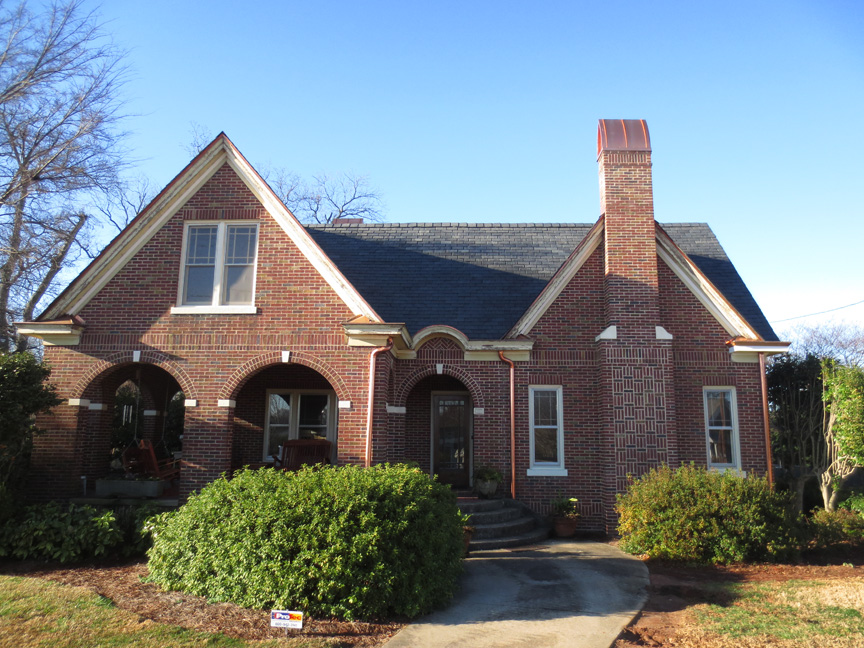
The James A. Fulmer House, Fountain Inn, SC, January 2015. Image by Eric Plaag.

The James A. Fulmer House, Fountain Inn, SC, January 2015. Image by Eric Plaag.

Last week, our latest National Register of Historic Places nomination property--the James A. Fulmer House in Fountain Inn, SC--sailed through its South Carolina Board of Review hearing and is now under consideration for formal listing by the National Park Service. We expect to hear news about this by sometime in late fall.

Our blog entry today, though, is not so much about the James A. Fulmer House in particular but rather the Atlanta-based plan book architect Leila Ross Wilburn and her intriguing connection to the design of this fascinating house.

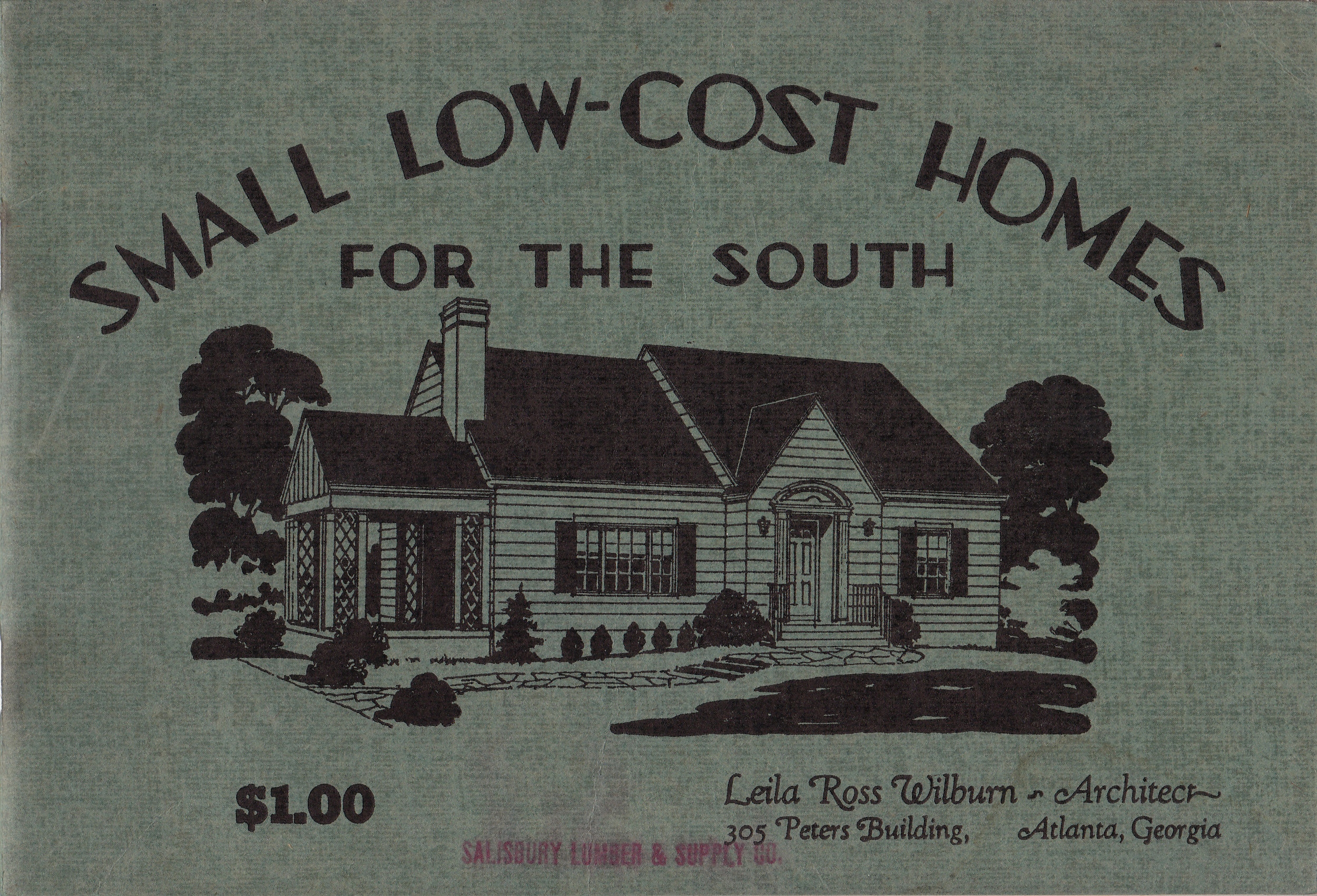
Leila Ross Wilburn (1885-1967) was born in Macon, Georgia, and studied at Agnes Scott Institute from 1902 to 1904. Thereafter, she took private instruction in architectural drawing, then moved on to a drafting apprenticeship from 1906 to 1908 with B. R. Padgett and Son. In 1909 she opened her own firm in Atlanta, becoming one of the first female plan book architects of the 20th century and only the second registered female architect in the state of Georgia. Five years later, she published her first plan book, Southern Homes and Bungalows. Another nine plan books would follow during the next forty years, and her designs soon became immensely popular with middle-class families seeking to build fine homes at a modest price. In her book Small Low-Cost Homes for the South, which was probably published circa 1930 and cost only a dollar, fifty-two such plans were featured. Consumers who liked her plan #1583, for example, could then write to her and purchase complete plans and specifications for twenty dollars, additional sets at five dollars apiece, and a lumber and mill list for another five dollars. Such prices were typical.

Wilburn was aware that stock plans like the ones she peddled would not be suitable for every buyer, even if the buyer generally liked a particular design. With that in mind, she offered two suggestions to plan buyers: “If you have a good contractor, [any] changes may be marked on the blueprint and you can use the stock plan. However, if the changes wanted are extensive, complicated, or you want something entirely different, it will be necessary to have new plans drawn.” Wilburn estimated that the cost of a new set of plans was usually about four times the cost of a stock set of plans, a substantial difference that would have rendered the purchase of special plans unworkable for many buyers.

So, how is Wilburn connected to the James A. Fulmer House? While family tradition holds that James A. Fulmer, Jr., drafted the house plans for the James A. Fulmer House while he was still in high school (with assistance from one of his teachers), there is substantial evidence that the design for the home was in fact strongly influenced by a mail-order architectural design crafted by Leila Ross Wilburn. Indeed, when they were planning to build what would be their third house in Fountain Inn, Dr. James A. Fulmer and his wife, Emmie Belle Stewart Fulmer, secured and retained copies of Wilburn’s house plan #1561, which was marked with a handwritten notation by Mrs. Fulmer calling the blueprints “unused.”  A close comparison of the Wilburn and Fulmer floor plans, however, reveals that the Fulmer House is in many respects a reverse plan of Wilburn house plan #1561, modified to address the specific needs, desires, and aesthetics of the Fulmer family. Various interior design details are also clearly lifted from the Wilburn plans and employed in the Fulmer House.

The house at 1311 Augusta St. in Greenville, SC. (Image courtesy of Google Street View)

The house at 1311 Augusta St. in Greenville, SC. (Image courtesy of Google Street View)

In spite of these vast similarities, though, it would be somewhat exaggerated to describe the Fulmer House as a complete Wilburn design, and it appears that the Fulmers did indeed follow Wilburn’s recommendations regarding altering her plans to suit their own tastes. While Wilburn intended plan #1561 to be Craftsman in style, for example, with prominent stone features along the front porch, the chimneys, and the front portion of both sides, a brick foundation, weatherboard on the remainder of the exterior, open-tailed rafters, and prominent bracket features, the Fulmers opted instead for a High Tudor Revival, all-brick exterior with decorative brick patterns throughout, arched porch openings, and closed soffits. On its surface, such a change from the Wilburn plans seems strange, but family tradition holds that Emmie Belle Stewart Fulmer hoped to emulate an exterior design similar to the one of a house she had seen located at 1311 Augusta Street in Greenville, South Carolina; indeed, the present Fulmer House owner remembers his grandmother pointing out the Greenville house on several occasions as the inspiration for the exterior style of the Fulmer House. In short, the Fulmer House appears to be a variation on Wilburn plan #1561 dressed up to resemble the house at 1311 Augusta Street in Greenville.

The James A. Fulmer House may be the first property individually nominated to the National Register of Historic Places in South Carolina whose design can be directly attributed, at least in part, to the architectural plans of Leila Ross Wilburn. That said, there is precedent for the individual listing of Wilburn-designed and Wilburn-influenced properties to the National Register, most notably in the Kidd House in Lavonia, Georgia, a 1919 Craftsman-inspired bungalow. Wilburn-designed and Wilburn-influenced properties also frequently appear in National Register residential historic districts throughout the Carolinas and Georgia. For example, two Wilburn-inspired houses—the Kienel House and the Louden House—that were the result of combining two separate Wilburn stock plans are also listed in the National Register as contributing properties in the Collins Avenue Historic District in Acworth, Cobb County, Georgia. Similarly, the William B. King House in Conway, South Carolina, is a Wilburn-designed residence that is listed as a contributing property for the Conway Residential Historic District. Carolina Historical Consulting, LLC, remains on the hunt for Wilburn-designed or Wilburn-influenced properties that are eligible for the National Register and not yet listed, and we'd love to hear from you if you have one.

Cover from Leila Ross Wilburn's Small Low-Cost Homes for the South, ca. 1930

Cover from Leila Ross Wilburn's Small Low-Cost Homes for the South, ca. 1930

As part of our research on the James A. Fulmer House, Carolina Historical Consulting, LLC, located and purchased a copy of Wilburn's Small Low-Cost Homes for the South (ca. 1930). While this plan book appears to be held in the special collections of only four repositories throughout the United States, unlike many of Wilburn's other plan books, it has never been digitized for public viewing. With this in mind, we offer it here for viewing by the public. We are also donating our copy this week to the McCain Library at Agnes Scott College, which maintains digital copies of many of Wilburn's other works and has shared them with the MAK Historic District; you can take a look at some of the other Wilburn plan books here.

Leila Ross Wilburn, Small Low-Cost Homes for the South, ca. 1930 (PDF)


1 Comment

The Story Behind Meat Camp, North Carolina

July 12, 2015 Eric Plaag

Ever wondered how Meat Camp, NC, got its name? Principal consultant Eric Plaag was recently asked by West Virginia Public Radio's "Inside Appalachia" to tell the story. You can hear the tale beginning at the 26:12 mark.

Comment

Our Statement on the Confederate Flag at the SC State House

June 23, 2015 Eric Plaag
Dr. Eric Plaag speaking in February 2015 in front of a Confederate battle flag--IN A MUSEUM, WHERE IT BELONGS. Photo courtesy of Gloria Tuten.

Dr. Eric Plaag speaking in February 2015 in front of a Confederate battle flag--IN A MUSEUM, WHERE IT BELONGS. Photo courtesy of Gloria Tuten.

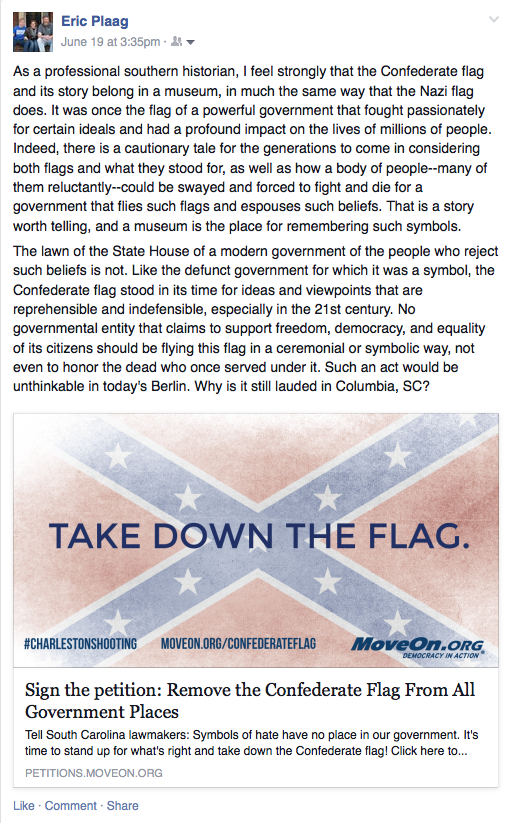
In light of the senseless and racially motivated murder of nine African-American parishioners that occurred in Charleston at the Emanuel AME Church on June 17, the founder and principal consultant at Carolina Historical Consulting, LLC, Dr. Eric Plaag, issued the following statement on June 19 at 3:35pm about the continued and shameful presence of the Confederate flag on the grounds of the South Carolina State House in Columbia, SC:

As a professional southern historian, I feel strongly that the Confederate flag and its story belong in a museum, in much the same way that the Nazi flag does. It was once the flag of a powerful government that fought passionately for certain ideals and had a profound impact on the lives of millions of people. Indeed, there is a cautionary tale for the generations to come in considering both flags and what they stood for, as well as how a body of people--many of them reluctantly--could be swayed and forced to fight and die for a government that flies such flags and espouses such beliefs. That is a story worth telling, and a museum is the place for remembering such symbols.

The lawn of the State House of a modern government of the people who reject such beliefs is not. Like the defunct government for which it was a symbol, the Confederate flag stood in its time for ideas and viewpoints that are reprehensible and indefensible, especially in the 21st century. No governmental entity that claims to support freedom, democracy, and equality of its citizens should be flying this flag in a ceremonial or symbolic way, not even to honor the dead who once served under it. Such an act would be unthinkable in today's Berlin. Why is it still lauded in Columbia, SC?

We are fully aware that some residents of the Carolinas and the South, including some of our clients, will not agree with this position. That's your right, of course. But we here at Carolina Historical Consulting, LLC, refuse to stand idly by while that flag still flutters on the property of the South Carolina people, mocking daily the freedom, equality, and rational good sense that any decent Carolinian and American should stand for.

For those who now want to argue that the Confederacy was not about slavery but states' rights, and thus the flag is a symbol of heritage and political freedom, not hate, well...we urge you to re-read the Articles of Secession from the Confederate states. Not just the Ordinances...the Declarations as well. You can find all of them right here.

States' rights was merely a euphemism for something much less polite. To say otherwise is either intellectual dishonesty or outright ignorance.

Our principal consultant's original Facebook post from June 19 regarding the flag controversy.

Our principal consultant's original Facebook post from June 19 regarding the flag controversy.

Comment

Civilian Experiences at the Hands of Sherman's Men Near River's Bridge, SC

June 23, 2015 Eric Plaag
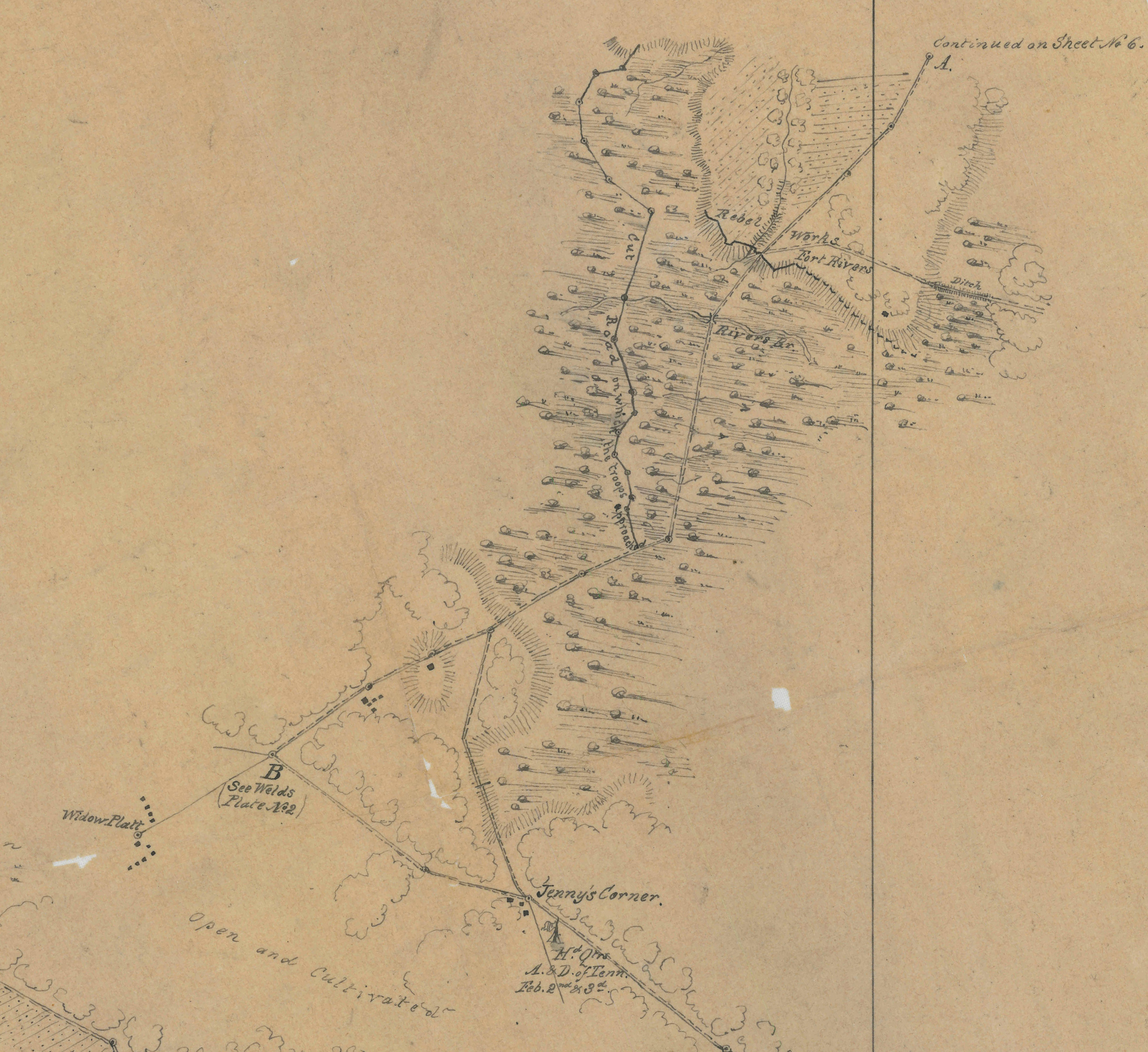
Rivers Bridge approach detail, excerpt from Map Z12-9, National Archives and Records Administration

Rivers Bridge approach detail, excerpt from Map Z12-9, National Archives and Records Administration

On February 7, 2015, I had the honor of giving a presentation at the Rivers Bridge State Historic Site in Erhardt, SC, entitled “He Says He Was a Union Man”: Sherman’s March and the Civilians of the Rivers Bridge Vicinity. This presentation was part of the South Carolina State Parks’ ongoing commemorative activities celebrating the 150th anniversary of this pivotal event in South Carolina’s history.

As the title implies, the presentation focused on civilian experiences of Sherman’s campaign as it passed through the Rivers Bridge vicinity, explaining the kinds of sources that I used in completing a three-year, grant-funded mapping project of nearly 400 sites associated with Sherman’s March in South Carolina and what those sources can tell us about both soldiers and civilians involved in the events. One of the surprising discoveries, for both Union soldiers and me as a researcher, was the large number of Unionist residents living near Rivers Bridge. As this presentation suggests, I am presently engaged in a much larger book project to document Sherman’s March in South Carolina on a daily, micro level, highlighting both soldier and civilian experiences in a manner that allows scholars and residents to locate physical resources associated with the campaign and thus better understand their local history. I expect that this book will be complete sometime in 2016.

I have had numerous requests from individuals and organizations who were not able to attend this event, asking to see a copy of my remarks. As a courtesy, I am attaching them in the PDF below. While you should feel free to download them for personal research use, they are protected by copyright, so I ask that you secure permission from me before reprinting, redistributing, or reposting them anywhere else.

Rivers Bridge Presentation Text (in PDF)

Comment

Remembering the Burning of Columbia

June 23, 2015 Eric Plaag
City of Columbia, SC, detail from Map Z12-16A, Griswold’s and Weld’s Surveys, National Archives and Records Administration

City of Columbia, SC, detail from Map Z12-16A, Griswold’s and Weld’s Surveys, National Archives and Records Administration

On January 18, 2015, I had the honor of giving a presentation at the South Carolina Confederate Relic Room in Columbia, SC, entitled “For the First Time I Am Ashamed”: Rattled Yankees and Inconsolable Civilians in the Wake of the Burning of Columbia. This presentation was part of Historic Columbia Foundation’s ongoing commemorative activities celebrating the 150th anniversary of this pivotal event in South Carolina’s history. You can read more about those events at this website.

As the title implies, the presentation focused on civilian and soldier experiences of the fire, documenting an event far more horrific than recent historians have allowed. One of my major assertions was that it is time to revisit the characterization of this event by past scholars, most notably Marion B. Lucas in his 1976 book Sherman and the Burning of Columbia, which downplayed the extent of the destruction and dismissed many of the personal experiences of eyewitnesses on both sides of the conflict. Instead, as we pause to commemorate these events, we owe it to those who came before us to develop a more rigorous means for both quantifying and qualifying the extent of Columbia’s destruction. Indeed, I will be reaching out to scholars over the next several months to begin a project that will allow us to do exactly this.

I have had numerous requests from individuals and organizations who were not able to attend this event, asking to see a copy of my remarks. As a courtesy, I am attaching them in the PDF below. While you should feel free to download them for personal research use, they are protected by copyright, so I ask that you secure permission from me before reprinting, redistributing, or reposting them anywhere else.

Burning of Columbia Presentation (in PDF)


Comment

©2015-26, Carolina Historical Consulting, LLC